
Introduction
Modern customers set very high standards and expect the best user experience across every type of commerce, medium, and platform. Businesses must deliver excellent performance and distinctive buying experiences wherever and whenever customers choose to shop.
Classic e-commerce software can struggle to meet modern expectations for flexibility, agility, and performance. A headless commerce backend gives companies greater control over their storefronts while supporting faster experiences, flexible integrations, and independent scaling.
In this article, we focus on the architecture, technologies, and development practices behind a modern headless commerce solution for 2026.
What Is a Headless E-Commerce Backend?
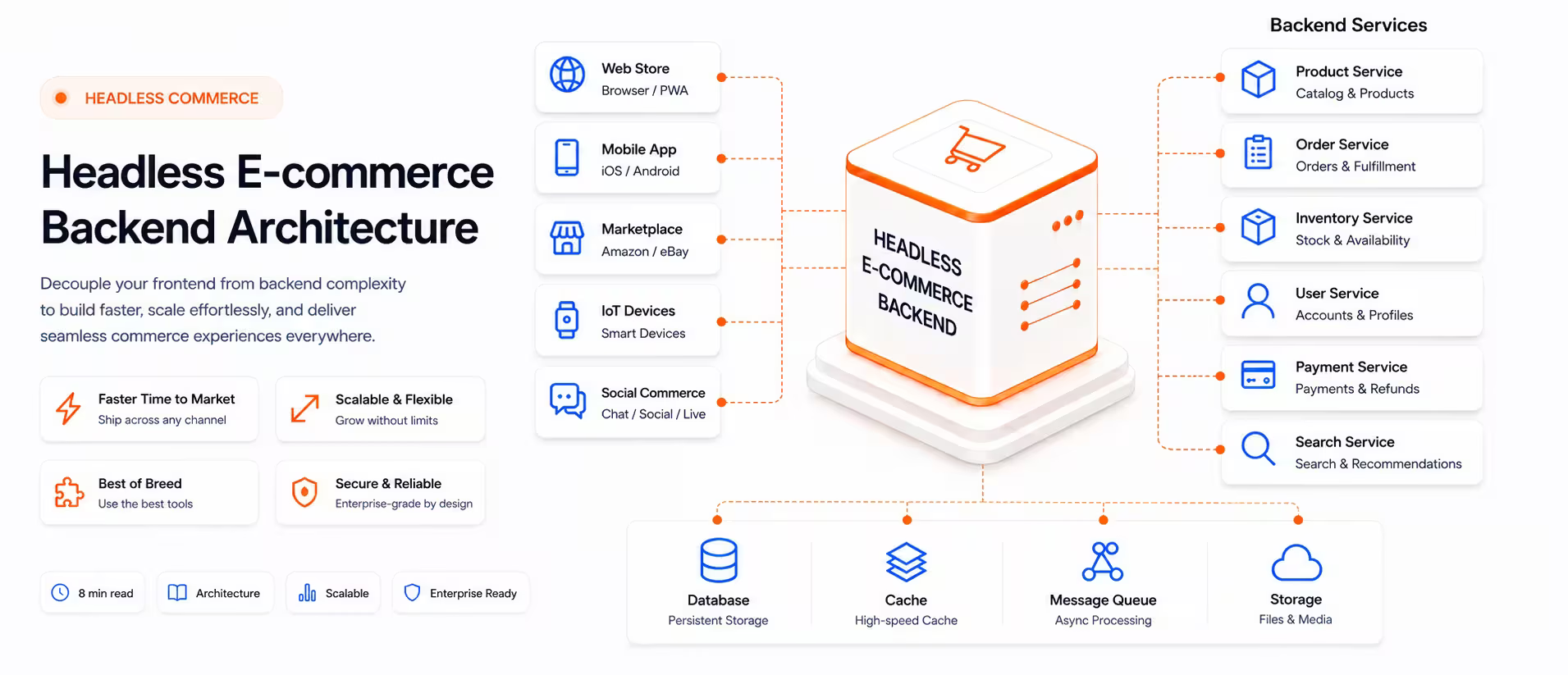
A headless commerce backend is an e-commerce solution built with a decoupled architecture. It separates the customer-facing frontend from the commerce engine that manages products, inventory, customers, payments, orders, and other business rules.
The commerce engine exposes APIs—usually REST or GraphQL—that power buying experiences built with frameworks such as React, Vue, Angular, or Next.js. These experiences may include web stores, mobile apps, kiosks, smart displays, marketplaces, and other digital touchpoints.
Because the frontend and backend are separated, developers can maintain and scale each part independently. This gives businesses stronger flexibility, faster iteration, and more freedom to create channel-specific experiences.
Traditional vs. Headless E-Commerce
The main difference is architectural: traditional commerce tightly couples the frontend and backend, while headless commerce keeps them independent.
| Area | Traditional (Monolithic) Commerce | Headless Commerce |
|---|---|---|
| Architecture | Tightly coupled frontend and backend | Decoupled frontend and backend |
| Flexibility | Low | High |
| Performance | Medium | Excellent |
| Scalability | Medium | High |
| Development speed | Medium | High |
| Best for | Small businesses and simple storefronts | Growing businesses and multichannel selling |
A headless approach is typically better suited to growing organizations, complex integrations, and multichannel commerce. Traditional platforms can remain practical for smaller businesses with straightforward storefront requirements.
Why Are Businesses Shifting to Headless Commerce?
Headless E-Commerce Architecture: Layers and Tech Stack
A well-structured headless commerce solution generally includes five major layers:
Many organizations begin with a modular monolith and evolve toward microservices when scale and organizational complexity justify it. Containerization with Docker and orchestration with Kubernetes can support reliable deployment and scaling.
Best Tech Stack for a Headless E-Commerce Backend in 2026
Choosing technologies that fit your team, scale, security requirements, and integration landscape creates a stable foundation for the wider commerce ecosystem.
| Layer | Recommended Technologies |
|---|---|
| Backend | Laravel, Node.js with Express, or .NET Core |
| APIs | REST or GraphQL |
| Database | PostgreSQL or MongoDB |
| Search | Elasticsearch |
| Cache | Redis |
| Cloud infrastructure | Microsoft Azure or AWS |
| Frontend | React or Next.js |
| Containers | Docker |
| Orchestration | Kubernetes |
Best Practices for Developing a Headless E-Commerce Solution
Design the API First
Define the commerce API contracts before developing channel-specific frontends. APIs should remain reusable, consistent, well documented, and independent of one particular interface.
Secure the Commerce API
Protect APIs with established standards such as OAuth 2.0, OpenID Connect, JWT, TLS, rate limiting, input validation, and role-based access control.
Leverage Caching
Use a deliberate caching strategy to reduce latency, protect backend services, and improve response times for frequently requested catalogue and content data.
Plan for Eventual Consistency
Distributed commerce services may not update every system instantly. Design workflows, retries, idempotency, and reconciliation processes with eventual consistency in mind.
Implement CI/CD
Build automated pipelines that test, scan, package, and deploy code consistently. Strong CI/CD practices help teams release improvements faster while reducing production risk.
Final Thoughts
A headless e-commerce backend gives growing businesses the freedom to deliver fast, personalized, and consistent experiences across multiple channels. Its long-term value depends on disciplined API design, strong security, sensible service boundaries, reliable infrastructure, and a technology stack aligned with real business needs.
For many organizations, the most practical path is to begin with a modular architecture, establish clean APIs, and introduce additional services only when scale or complexity requires them.