
Introduction
The world of web development is constantly evolving, and businesses need websites and applications that are fast, secure, scalable, and cost-effective. One of the biggest reasons modern web development has become more accessible is the rise of open source technologies.
From small business websites to large enterprise applications, open source tools have become the preferred choice for developers and organisations around the world. They are free to use, supported by active communities, and continuously improved through contributions from developers worldwide.
This guide explores the best open source technologies for web development, their advantages, and how they help businesses create reliable and high-performing digital solutions.
What Are Open Source Technologies?
Open source technologies are software, frameworks, and programming tools whose source code is publicly available. Developers can view, modify, and share the code according to project requirements. These solutions are usually developed and maintained by large communities.
Many modern websites and web applications are built using open source technologies because they have proven to be reliable, flexible, and scalable.
Why Open Source Technologies Are Preferred
Open source technologies offer practical advantages for startups, small businesses, and large enterprises.
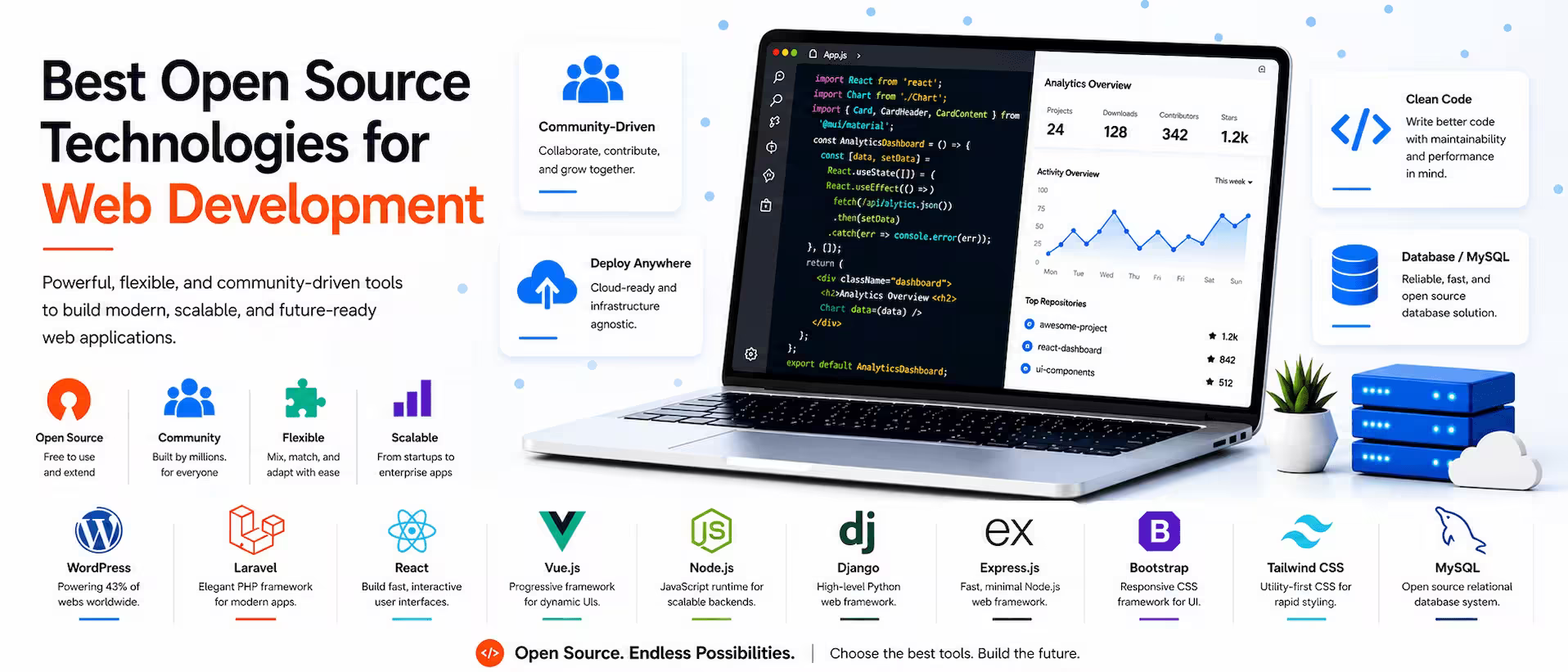
Best Open Source Technologies for Web Development
1. WordPress
WordPress is one of the world's most popular open source content management systems. It is used for business websites, blogs, portfolios, corporate websites, e-commerce stores, and educational platforms.
Best for: Business websites, blogs, portfolios, corporate sites, e-commerce stores and educational websites.
2. Laravel
Laravel is an open source PHP framework based on the Model-View-Controller architecture. It provides developers with tools for building reliable and high-performance custom applications.
Best for: Custom web applications, CRM software, ERP systems, SaaS and enterprise platforms.
3. React
React is an open source JavaScript library for developing interactive user interfaces. It is commonly combined with Laravel, Node.js, Django and other backend technologies.
Best for: Single-page applications, dashboards, social platforms, e-commerce and interactive applications.
4. Vue.js
Vue.js is an open source JavaScript framework known for its simplicity, flexibility, and approachable learning curve.
Best for: Small and medium applications, progressive web apps, interactive interfaces and dashboards.
5. Node.js
Node.js is an open source JavaScript runtime that enables developers to build fast server-side applications using JavaScript.
Best for: Real-time applications, chat systems, streaming platforms, APIs and microservices.
6. Django
Django is an open source Python framework known for security, scalability and rapid application development.
Best for: Enterprise systems, healthcare, finance, education and AI-powered applications.
7. Express.js
Express.js is a minimal open source backend framework built on Node.js. It simplifies routing, middleware and API development.
Best for: REST APIs, web applications, backend services and single-page application backends.
8. Bootstrap
Bootstrap is an open source CSS framework for developing responsive, mobile-first websites and application interfaces.
Best for: Responsive websites, landing pages, admin dashboards and business websites.
9. Tailwind CSS
Tailwind CSS is a utility-first open source CSS framework that gives developers detailed control over custom interface design.
Best for: Modern websites, custom applications, SaaS platforms and landing pages.
10. MySQL
MySQL is an open source relational database management system used to store and manage application data.
Best for: Business applications, e-commerce, CRM, ERP and content management systems.
How to Choose the Best Technologies for Your Project
No single technology is suitable for every project. The best choice depends on business goals, features, scale, security needs, team expertise and future plans.
- WordPress: Ideal for blogs, business websites and content-driven platforms.
- Laravel: Well suited to custom business applications and enterprise solutions.
- React and Vue.js: Excellent for interactive user interfaces.
- Node.js and Express.js: Strong choices for real-time applications and scalable APIs.
- Django: Suitable for secure, data-intensive applications.
- Bootstrap and Tailwind CSS: Help teams build responsive interfaces efficiently.
- MySQL: Provides reliable data storage for a wide range of applications.
Future of Open Source Web Development
Open source technologies continue to shape the future of web development. Artificial intelligence, cloud-native applications, headless content management systems, progressive web apps, and serverless architectures are increasingly built on open source foundations.
As communities grow and technologies evolve, open source solutions are expected to become more secure, efficient and developer-friendly, helping businesses create innovative and scalable digital experiences.
Final thought
Open source technologies have transformed web development by making powerful tools accessible to businesses of all sizes. Whether you are building a company website, an e-commerce platform or a large enterprise application, open source solutions provide the flexibility, reliability and scalability needed to succeed.
WordPress, Laravel, React, Vue.js, Node.js, Django, Express.js, Bootstrap, Tailwind CSS and MySQL each play an important role in modern development. Understanding their strengths and selecting the right combination can help businesses build secure, high-performing and future-ready applications.